Showing posts sorted by relevance for query yummy. Sort by date Show all posts

Does Wild Birds Unlimited Sell Mealworms?

Mealworms-Another treat to attract wild birds.

Wild Birds Unlimited in East Lansing, MI do sell live and dried mealworms. Feeding live mealworms (Tenebrio monitor) as a special treat has become a very popular way to attract a different variety of wild birds.

If you haven't used mealworms before, they are the larvae of a beetle with a high protein level. Many birders believe the mealworms are used solely for attracting Bluebirds. This is definitely not the case as many other species enjoy these little treats. Some birds attracted to mealworms include: wrens, robins, bluebirds, jays, sparrows, cardinals, woodpeckers, nuthatches, titmice, chickadees, and even Purple Martins.

Mealworms can be offered from just about any bowl, and there are some feeders at Wild Birds Unlimited especially for feeding mealworms. The WBU Dinner Bell feeder (in side picture) is one of our most popular feeders.

How to feed birds mealworms:
Most people “train” the birds to come at the same time, same place every day. Some people whistle or wear a bright hat to signal the birds you are about to feed. Our experience has shown that the early birds like to get the worms. Birds are hungry in the morning and it’s always nice to start the day with a good breakfast. You can also feed them in the evening before they roost.

Start out by placing a teaspoon of worms in a feeder near where you see the bird perching. Sometimes I like to put them out with an apple slice. The worms can have a yummy last meal and the birds enjoy the juicy worms and may even enjoy the apple as dessert. As you get more birds trained to come you can increase the amount of worms to about a teaspoon of worms per bird per day. Once the birds have figured out where you are feeding, you can move the feeder short distances every day or so until it's located where you can view them comfortably.

Care of mealworms:
Our Wild Birds Unlimited 500 count medium mealworms come in a mixture of bran and can be stored for several weeks in the refrigerator if they are fed. To feed your mealworms remove them from the refrigerator once every 2 weeks and feed them an apple for 24 hours at room temperature. This is how they get their drink of water and will stay fresh and plump. Then remove any uneaten apple, add about one inch of bran, or crushed Wheaties to the container and place back in the refrigerator.
REMEMBER: To maintain mealworms keep them dry and well ventilated.
NOT TOO DEEP! -Maximum depth of worms and bran no more than 1 inch deep.
KEEP COOL! Ideally mealworms should be stored at 45 degrees, so store them somewhere cool.

How to Attract Bluebirds

What have you got to feed bluebirds in the winter? Katie ~ Holt, MI
I’ve been away. I usually feed bluebirds year-round. Will they come back? MB ~ East Lansing, MI


Food for Bluebirds
Providing food for bluebirds during the winter and early spring may increase their chances of survival in bad weather. And if you want to encourage them to feed up close there are a variety of foods you can offer.

Wild Birds Unlimited - East Lansing, MI store has suet nuggets, nuts and seed blends with fruit, tree nuts and suet. But by far the most popular treat for bluebirds in the winter is the live mealworms. Bluebirds love to eat mealworms. I do my best to keep the fridge full of mealworms at both stores.

If you haven't used mealworms before, they are the larvae of a beetle with a high protein level. Mealworms can be offered from just about any bowl, and there are some feeders at Wild Birds Unlimited especially for feeding mealworms. The WBU Dinner Bell feeder is one of our most popular.

How to feed birds mealworms
Most people “train” the birds to come at the same time, same place every day. Some people whistle or wear a bright hat to signal the birds you are about to feed. Our experience has shown that the early birds like to get the worms. Birds are hungry in the morning and it’s always nice to start the day with a good breakfast. You can also feed them in the evening before they roost.

Start out by placing a teaspoon of worms in a feeder near where you see the bird perching. Sometimes I like to put them out with an apple slice. The worms can have a yummy last meal and the birds enjoy the juicy worms and may even enjoy the apple as dessert. As you get more birds trained to come you can increase the amount of worms to about a teaspoon of worms per bird per day. Once the birds have figured out where you are feeding, you can move the feeder short distances every day or so until it's located where you can view them comfortably.

How to Bring Bluebirds Back
If you’ve broken the routine and have been away for awhile, don’t worry. The birds never forget a food source. They’ll probably send a young scout out to keep checking the status of the feeder especially in bad weather.
Photo from Tom T. at WBU So. Yarmouth, Ma.
Water Draws Bluebirds
Finally, don’t forget your heated birdbath. Water is a powerful attractor and will increase the number and variety of birds coming to your yard. As the winter weather blows through mid-Michigan the birds will start looking for any open water. Having heated birdbaths or adding a heater to the bath you already have set up would be ideal for helping blue birds during the winter.

When you provide a bluebird with needed resources it not only gives you the chance to watch these beautiful birds up close, it also helps aid in bluebird conservation.

Colorful Bird Splats Contain Secrets

You’ve patiently waited all summer for the cherries to ripen. Tomorrow they will be at their peak for picking. Then in the morning you discover you’ve been hit by Berry Thieves! If the fruit is ready, a variety of birds can pick a tree clean in a day.

Fruit grows on trees, bushes, climbing plants and on shrubs and several species of birds love them. Purple mulberry splats decorate the sidewalk as the berry season begins in mid-Michigan and as the season progresses so does the color of splats. For birds, the range of fruit and the extended length of the season during which various types become available provides many songbirds a nourishing lifeline year round.

The quest for survival has led plants to develop delicious and ingenious ways of making the animal world compete in sending their seeds out to new lands. The yummy, bright colored, vitamin packed, flesh of the fruit conceals and protects the seed within. Birds and berries are a remarkable example of Mother Nature in action. Birds eat the produce and spread the precious seeds contained in the berry over a wide area. They extract or excrete the undigested seeds enabling the plant to grow and spread.

There is no doubt that plants are one of the world's most successful life forms. They are able to survive in virtually every environment imaginable, from the driest deserts to the wettest jungles. There are even tough “weeds” poking up through the cracks in the cement. Plants evolved countless methods of producing and spreading seeds. So don’t blame the birds for stealing all the fruit. They are being used in Mother Nature's master plan to spread tiny packages of genetic material across the land to ensure the survival of her planet of plants.

Unique Bird Feeders

Some people may call it lazy, but I call it conserving energy: My experience with the Seed Cylinder Feeder.

I’ve been feeding birds for decades and after I started using my mesh finch feeder and the Squirrel Buster Plus and No-Mess seed, I thought there was no new feeder or seed that could make me happier. I was so satisfied with my bird feeding set up I wasn’t even tempted to try other feeders (well maybe just a little tempted, I work at a bird feeding store after all).

But customers would keep coming in raving about the seed cylinder feeders. So after about the millionth time a customer came in to tell me it's one of the easiest feeders to maintain and attracts a wide variety of birds, I finally broke down and bought a seed cylinder feeder.

I chose the WBU Dinner Bell feeder because if the seed cylinder didn’t work in my yard I could still use the feeder in a different way. It's also made in the USA and has a lifetime guarantee.

I slipped a fresh cylinder packed with pecans, sunflower chips and cranberries on the feeder and hung it where the squirrels couldn’t reach it and waited. It looked good. It kind of reminded me of the pecan log rolls my neighbor gives me every Christmas. Yummy!

Word went out fast. The birds thought it looked good too; no question about that. Cardinals, chickadees, wrens, nuthatches, woodpeckers, finches, jays, grosbeaks and even a pair of titmice came to feast on this delicacy. I was sure it would be gone by the time I got home the next day.

But it wasn't. And it was still there the next week. And the next. Every night I sat in a chair with a cat on my lap watching the birds dine at the seemingly bottomless seed cylinder.

That was four weeks ago, and there’s still a ring of seed remaining. Depending on the bird activity in your area, a seed cylinder can last for weeks. Why didn’t I listen to myself years ago when I told everyone what a great feeder this was!

Cleaning the feeder is super fast and easy and I don’t have to refill the feeder every day. Not that I'm lazy but bird watching is supposed to be a relaxing hobby and this feeder really lets me relax. I'm sold on these seed cylinders.

There are lots of flavors to choose from to attract a wide variety of birds, and they're very versatile. Each cylinder comes with a mesh bag which can be hung from a tree limb, or can be placed on the variety of feeders at Wild Birds Unlimited. Now I can have weeks of enjoyment with very little effort. If you don't believe me check out my video evidence.

What are the Dog Days of Summer?

Baby Baltimore Oriole waiting for food
I had a very good spring and summer watching the Baltimore Oriolesfeeding regularly from the Wild Birds Unlimited - East Lansing store’s window feeder. One of my best salesmen, the bright orange and black bird sold hundreds of oriole feeders to awed customers and worked for only a few mealworms, bottles of BirdBerry jelly and lots of sugar water.

Recently he brought his big yellow babies up to feed too. Now they are preparing to fly south. The nesting season is over for lots of birds. As the morning bird chorus slows down, the sounds of summer switch to the buzzing song of the Cicadias'.

Summer is the season for insects. Unfortunately with so little rain in the Lansing area this year, a lot of birds are still supplementing their diet at bird feeders. The blackbirds, which usually leave the feeders to search for yummy bugs in the lawn didn’t leave.

Am. Robin digging under the feeders for spilled nuts and seeds
And I’ve never had so many customers ask what to feed their robins. People noticed that lots of American Robins have also been hanging out under the bird feeders to find a quick treat in this sweltering weather.

These hot, sultry days of summer in the Northern Hemisphere are called the Dog Days of Summer. According to John Brady’s Analysis of the Calendar in 1813, this is believed to be an evil time when "the Sea boiled, the Wine turned sour, Dogs grew mad, and all other creatures became languid; causing to man, among other diseases, burning fevers, hysterics, and phrensies."

Am. Goldfinch eating Canada Thistle
The Old Farmer's Almanac lists the traditional timing of the Dog Days as the 40 days beginning July 3 and ending August 11, coinciding with the rising of the Dog Star, Sirius. These are the days of the year when rainfall is at its lowest levels.

The American Goldfinches have just started their nesting season right now. They wait for flowers to go to seed. Grasses, Milkweed, wild Canada Thistles and other weeds are important to goldfinches, as a source of food and as raw material for their nests.

Then we come out of the Dog Days into my favorite time of year! By mid-August you'll wake up every morning to the tinkling tune of baby goldfinches!

Related Articles:

Funny Squirrel days at the feeder

Sarah, I thought you would appreciate these photos for your Friday Photo.
I looked up and saw this magnificent hawk sitting on the feeder with a squirrel eating oblivious to any problem ahead of him. I took the picture through the window. The flash on the camera went off for the first two photos but he allowed a third before he flew away (without the black squirrel).
I laughed when I saw this squirrel doing much needed dental work on Mr. Jack O'Lantern. Please feel free to post these photos if you like. ~ Lansing

Thank you so much for adding a little fun to our Friday blog. Sometimes I feel guilty selling so many of the best squirrel proof feeders and squirrel baffles at our Wild Birds Unlimited store in East Lansing but obviously I don't need to worry. Squirrels always find a way to fill their belly and if they're lucky, nice people like you share yummy treats. Have a great day! ~ Sarah

Related Articles: 

How birds disperse seeds

You’ve waited patiently all summer for the the fruit on your plants to ripen. Tomorrow they will be at their peak for picking. Then in the morning you discover you’ve been hit by Berry Thieves! If the fruit is ready, a variety of birds can pick a tree or bush clean in a day.

Fruit grows on trees, bushes, climbing plants and on shrubs and several species of birds love them. Purple mulberry splats decorate the sidewalk as the berry season begins in mid-Michigan and as the season progresses so does the color of splats. For birds, the range of fruit and the extended length of the season during which various types become available provides many songbirds a nourishing lifeline year round.

The quest for survival has led plants to develop delicious and ingenious ways of making the animal world compete in sending their seeds out to new lands. The yummy, bright colored, vitamin packed, flesh of the fruit conceals and protects the seed within. Birds and berries are a remarkable example of Mother Nature in action. Birds eat the produce and spread the precious seeds contained in the berry over a wide area. They extract or excrete the undigested seeds enabling the plant to grow and spread.

There is no doubt that plants are one of the world's most successful life forms. They are able to survive in virtually every environment imaginable, from the driest deserts to the wettest jungles. There are even tough “weeds” poking up through the cracks in the cement. Plants evolved countless methods of producing and spreading seeds. So don’t blame the birds for stealing all the fruit. They are being used in Mother Nature's master plan to spread tiny packages of genetic material across the land to ensure the survival of her planet of plants.

How to Attract Birds This Holiday Season

Seasonal Needs
Nights are longer and colder this time of year. Birds require high-fat, quick-energy foods to stay active and warm. Insect-eaters are looking for more fats and fruits. Seed-eaters are searching for high-oil seeds and nuts. .
Have you noticed how ravenously the birds eat at your feeders, especially early in the morning and just before dusk? Chickadees can gain as much as 10% of their body weight each day and lose it all again during a cold winter night.

Recommended Foods
Attract more birds this holiday season and meet their dietary needs with a Wild Birds Unlimited Seed Wreath, No-Mess Blend seed, a Cranberry Fare Seed Cylinder or Peanut Butter Suet. Each has high-fat, quick-energy ingredients like black oil sunflower, peanuts, pecans, suet, or cranberries.

Our pecan packed Seed Wreath is a dining delight for birds, and it can add festive cheer to any yard. Use it as a decoration, or hang it near your existing feeders that are busier than ever these days.

Recommended Feeders
We recommend serving No-Mess Blend in our EcoTough™ Classic hopper feeder, Aspects Tube feeder, or Brome's Squirrel Buster Plus feeder. All are easy to clean, easy to fill, and come with a lifetime guarantee. But most importantly the birds like these feeders the best!

Also offering a Cranberry Seed Cylinder in a Seed Cylinder Feeder is an easy way to provide birds with essential calories throughout the holidays. Nuthatches can be seen prying seeds loose and sometimes flying off to store them for retrieval later in the same day or a quick source of food the next morning.

Or our EcoTough™ Tail Prop Suet Feeder is perfect for the Peanut Butter or Nut and Raisin suet cakes and attracts a wide variety of natural bug eating birds. The paddle simulates a tree trunk, allowing you to see woodpeckers use their stiff tail feathers for extra support while they feed. Slip a suet cake in and when a bird lands on the tail prop feeder they think they have just discovered a tree stuffed full of yummy bugs!

Just a Thought from two sister WBU stores in BC Canada

I started this blog to share observations about local nature and what’s going on in our Wild Birds Unlimited East Lansing, Michigan store. But did you know there are almost 300 Wild Birds Unlimited (WBU) stores across the US and Canada? 

Today I asked one of the WBU’s 2300 miles west of us in British Columbia, Canada to share what’s happening in their neck of the woods. Sherry and Cliff Jury own the WBU's in Abbotsford BC and Chilliwack BC.

Sherry Jury provided us with her lovely observations below:

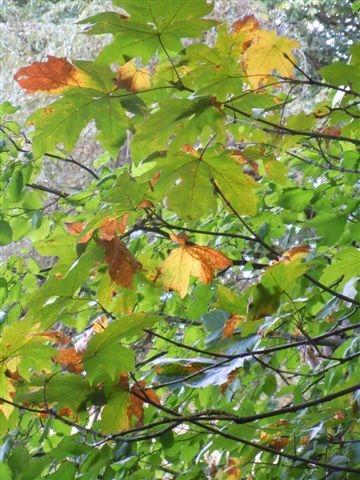
I always think of Mother Nature using October as a time to change her wardrobe. Gone are the bright greens, blues and purples. Now, for a brief moment, the colours of yellow and orange reigns supreme until they are replaced by dull browns and greys.

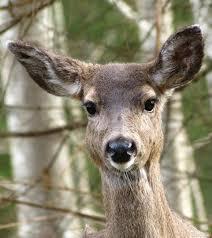
Our deer are certainly that colour now. We don’t have as many as we usually do (I hope that they are well), just the yearling and one doe and fawn are living in the back. Their coats now are a beautiful dark grey with a dark muzzle and white throat - very striking. They are still enjoying eating what is left of my violets and lady’s mantle plants but newly fallen leaves have been added to their diet. I thank them for their help with the leaves. There will be plenty to go around!

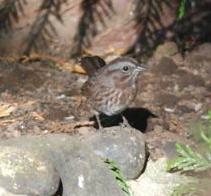
Our song sparrows are fighting for spots in the yard. One is claiming the front yard, two are claiming the back - unless both are fighting for the creek area, not sure there. They are singing happily in the willow and cedar trees and I must admit, they are improving. Their song now sounds like one a song sparrow should sing. Each has added their own little flourishes and trills to make his song unique and sound nothing like how our old song sparrow sang. We will see how successful they are at attracting a mate in the spring, if they still live here.

The first juncos have also arrived to lay claim to the back yard. These are the dominant males of the flock and they certainly act like it. Our current juncos are fat and healthy and are constantly chasing each other away from any scrap of food they find below the feeders. I notice they also have a wide space around each other when feeding unlike what occurs when the other birds arrive. Then, everyone feeds, fights and lives together in one big, feisty family. Not now, these guys are too important to mingle.

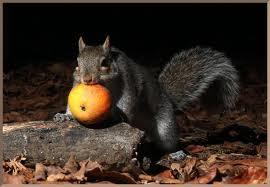
Everyone is eating more as nights are started to become cooler. Our squirrels are enjoying the extra apples on the trees. It is funny to watch them carry an apple around (they usually are as big as their heads) in their jaws and then try to bury them. But they don’t dig a hole. No, our squirrels sort of try to just push the apple in the dirt, hoping that by some miracle, it will bury itself. Dirt-covered apples, yummy.

~ by Sherry Jury
Home page: http://fraservalley.wbu.com/  
Facebook page: http://www.facebook.com/wbu.fraservalley.
.

Woodpeckers at the nectar feeder

Dear Sarah, I just looked out my kitchen window a few minutes ago to discover a Downy Woodpecker drinking/sipping from the hummingbird feeder, and not from the water in the ant moat as the chickadees have done, but from the ports covering the sugar water.  He/she took several sips, not enough time to get my camera though.

Is this unusual behavior?  I thought it was cool. 
Sue

ps the nesting material holder I got when I came in with our granddaughters is getting some good use.  They have taken most of the feathers and are now working on the other stuff.

Thank you for sharing your observations! It’s not unusual for a woodpecker to be attracted to sugar water. Lots of trees produce yummy sap like the sugar maples. Woodpeckers can drill into these trees for the sugary treat and also come back later to pick out bugs that get stuck in the sticky sap.

In fact hummingbirds are known to follow the sapsuckers during migration. The Yellow-bellied Sapsucker drills parallel "wells" in the bark of trees and laps up the sap that oozes out from the tree. Hummingbirds, waxwings, and warblers take advantage of these pre-drilled sweet sap sources for a quick bite while traveling.

Besides the hummingbirds and woodpeckers, there are orioles, finches, catbirds, rose breasted grosbeaks and some migrating birds like warblers that appreciate quick energy drinks at the nectar feeder. So keep the camera handy. I’d love to see photos!

I’m glad your nesting material is working out, too. I’m refilling mine as fast as I can with hair the cats are donating. I like to watch them struggling with a huge wad of the fluffy hair!
Sarah

Related articles:

What birds are attracted to mealworms besides bluebirds?

Mealworms-Another treat to attract wild birds.

Wild Birds Unlimited in East Lansing, MI sells live and dried mealworms. Feeding live mealworms (Tenebrio monitor) as a special treat has become a very popular way to attract a different variety of wild birds.

WBU Dinner Bell feeder
If you haven't used mealworms before, they are the larvae of a beetle with a high protein level. Many birders believe the mealworms are used solely for attracting bluebirds. This is definitely not the case as many other species enjoy these little treats. Some birds attracted to mealworms include: wrens, robins, bluebirds, jays, sparrows, cardinals, woodpeckers, nuthatches, titmice, chickadees, and even Purple Martins.

Single Cup Hanging Feeder
Mealworms can be offered from just about any bowl, and there are some feeders at Wild Birds Unlimited especially for feeding mealworms. The WBU Dinner Bell feeder is one of our most popular feeders.

A couple new feeders have also come out this year! The first is a Single Cup Hanging Feeder. It's a versatile cup that can hold mealworms or any other specialty food like suet nuggets, orange halves, grapes, apples, peanuts, or jelly.

Spiral Treat Tray Feeder
The second new feeder is the Spiral Treat Tray Feeder. Three cups spiral up the center rod and can be filled with mealworms or a variety of other treats.

How to feed birds mealworms:
Most people “train” the birds to come at the same time, same place every day. Some people whistle or wear a bright hat to signal the birds you are about to feed. Our experience has shown that the early birds like to get the worms. Birds are hungry in the morning and it’s always nice to start the day with a good breakfast. You can also feed them in the evening before they roost.

Start out by placing a teaspoon of worms in a feeder near where you see the bird perching. Sometimes I like to put them out with an apple slice. The worms can have a yummy last meal and the birds enjoy the juicy worms and may even enjoy the apple as dessert. As you get more birds trained to come you can increase the amount of worms to about a teaspoon of worms per bird per day. Once the birds have figured out where you are feeding, you can move the feeder short distances every day or so until it's located where you can view them comfortably.

Care of mealworms:
Our Wild Birds Unlimited 500 count medium mealworms come in a mixture of bran and can be stored for several weeks in the refrigerator if they are fed.

To feed your mealworms remove them from the refrigerator once every 2 weeks and feed them an apple for 24 hours at room temperature. This is how they get their drink of water and will stay fresh and plump. Then remove any uneaten apple, add about one inch of bran, or crushed Wheaties to the container and place back in the refrigerator.
REMEMBER: To maintain mealworms keep them dry and well ventilated.
NOT TOO DEEP! -Maximum depth of worms and bran no more than 1 inch deep.
KEEP COOL! Ideally mealworms should be stored at 45 degrees, so store them somewhere cool.

Does the warm weather mean early migration?

Birds that winter in the south don’t exactly know that we are having an early spring. They generally leave the same time each year based on internal circadian rhythms and subtle changes in the sunlight. However once they begin their journey, the weather in the United States can play a big role in how quick they reach their nesting grounds.

When we have unexpected cold fronts in the spring, birds can stop temporarily or even reverse direction to wait for better traveling conditions. And with this yummy spring weather we’re experiencing, the birds may speed up their migration spending less time at their normal pit stops to reach their destination.

Lately there has been a lot of excitement in the air with this crazy weather. I have seen waves of Dark-eyed Juncos stopping briefly at my feeders only to leave the next day on their way further north to their nesting grounds. The chickadees have been conducting battles for territory through song and checking out nesting sites. Bluebirds and other birds have started to carry off mouthful of nesting materials. While robins and cardinals, up before the sun, sing lovely ballads for their mates.

Things seem to be moving much faster than normal and people are curious if the migrating orioles and hummingbirds will show up earlier this year. I usually put my nectar feeders up April 15th and expect to see regular birds visiting by May. But I just checked the migration maps, YIKES!!, they've been sighted in Michigan!

It's still early but I think I'm going to wash up my nectar feeders and put them up today. If you want to check the maps or report the sighting of a bird go to www.hummingbirds.net to check the status of hummingbirds and http://www.learner.org/jnorth/maps/Maps.html for a lot of other spring sightings.

Related Articles: