Showing posts with label birds. Show all posts

Bird Anatomy

Learning the anatomy of birds gives clues to where they live and what they eat.  Learning the shapes and silhouettes of birds is helpful in identifying them at a distance.
Designed for flight


Birds are one of the few animals that have developed the ability to fly.  Every part from the skeleton to the feathers has evolved to aid in flight.  The skeleton, while using the same general design of other vertebrates has some distinct differences.  The skull is very light in proportion to the rest of the body because there are no teeth for chewing, or any heavy jaw or jaw muscles.  The job of grinding up food is performed by the gizzard.  This means the skull is usually around 1 percent of the body weight.  The bones are hollow with strut like structures inside. This makes them light while still making them strong enough for flight.  The forelimbs have developed into wings.
The wings are composed of the humerus or upper arm, and the radius or ulna, which makes up the forearm with wrist, and hand bones.  The forearm supports the secondary feathers, and the fused wrist, and hand bones support the primary feathers.  The joints have added strength because they have limited movement.
The skeleton has many modifications to allow birds to walk on their hind legs.

The muscles have also evolved for flight.  The important muscles for flight run between the upper arm, and the breast.  There are two pairs of flight muscles.  The larger pair called the pectoralis major contracts for the down stroke. The pectoralis minor handles the upstroke, which needs far less power.

The body is the third part of this design for flight.  It is very streamlined to reduce friction.  The smooth surface of the feathers reduces the friction even more.

The tail consisting entirely of feathers aids in maneuvering. The legs will usually be tucked under the body when flying so they don't affect the flight.

Beaks Legs and Feet

Beaks of birds are varied depending on the species, and are specialized for their particular diet.  In most birds they are light to save weight for flight.  Bird beaks are bony structures covered with keratin, much like our fingernails.

Just like bird beaks, the feet and legs of birds are specialized depending on each bird's habits, and life style.

Here are examples of a few of the specialized beaks and feet.
Drilling Holes  The hard beak of a woodpecker is good for drilling holes. Downy Woodpecker
Birds with short thin beaks usually eat insects.
Cracking seeds  A thick short, or conical beak is good for cracking seeds.

Buntings, Cardinals, Grosbeaks, Towhees, Finches ...
Cardinal
The bills of crossbills have lower and upper mandibles crossed, making it easier for them to eat pine cone seeds.  They start at the bottom of a cone and spiral upward, opening each scale, and removing the seeds with their tongues. 
Parrots have a different kind of conical bill good for Cracking seeds.
Scooping   A pelican's pouch is used to scoop fish.  When the fish is caught the pouch contracts to squeeze out water. Pelican
Birds such as thrashers and wrens, with slender curved bills can probe for insects. Mocking Bird
Straight slender bills are very versatile. Large birds like crows are often omnivorous.  Small birds will feed largely on insects.

Blackbirds, Bluebirds, Chickadees, Crows, Grackles, Jays, Magpies, Mockingbirds, Meadowlarks, Orioles, Robins, Thrushes,
Humming birds have long thin beaks for getting nectar from flowers.
Birds such as ducks use their webbed feet to swim and their flat beak to filter food from water. Mallard duck
A broad flat bill such as that of flycatchers, shrikes, or waxwings is good for catching flying insects.
Birds like hawks, owls, or eagles have sharp hooked beaks, and powerful claws for tearing meat, and eating other animals.
   eagle
 Bird Feet and Legs

Birds that have long legs such as the heron walk or wade more than they fly.

Most birds have four toes, three that face forward, and one rearward.  Birds that have two toes facing forward and two toes facing rearward usually hang onto the sides of trees.

Birds that swim like ducks will have webbed feet.

Predatory birds like eagles, and hawks will have strong talons.  They are usually not very good runners.
Here are a few of the many varied types of feet. 

 duck feet      bird feet    screech owl feet
   woodpecker feet  grepe feet  eagle claw   climb bird feet
Bird Brain

The brains of birds have also developed for flight.  The cerebellum is the part that is responsible for co-ordination of movement.  Because birds make extremely fast moves at very high speeds this part of the brain is large.  The cerebral hemispheres, which let the bird perform complex behavior patterns is also very large.  It turns out that many birds are quite intelligent even using tools and having social communication.

Digestive system

Birds are very active animals.  They use a lot of energy, and consume food at a very rapid rate.  Small birds may eat a third of their body weight in a day. They have specially evolved digestive systems with organs like the gizzard, not found in other animals.

Birds can be herbivores, carnivores, or omnivores.  The herbivores feed on seeds, fruit, and other plants, and have a more complex digestive system then carnivores, which feed on meat.

Lungs

Another thing that is different in birds are the lungs.  In other vertebrates the lungs consist of sacs.  Birds have extensions to the lungs called air sacs.  Inhaled air passes through the air sacs and back thought the lungs.  With this system, oxygen is transferred to the blood during both inhalation, and exhalation.  This gives bird's better use of oxygen for flying, and it allows them to get by with smaller lungs than other vertebrates.  This also aids birds that dive, and need to hold their breath for long periods.
Sight
Birds eyes are much larger in relation to their heads than ours, giving them the ability to see fine detail.  They process what they see faster than we do, and they are better at detecting movement.  Birds can’t roll their eyes like humans so they must turn their heads.  When a robin cocks its head to one side it is looking in that direction.  Having both monocular and binocular vision, bird’s eyes work together to see straight ahead as well as working independently.  This gives some birds an extremely wide field of vision, even allowing some birds to see both in front, and in back of themselves.  Birds such as waterfowl, or pigeons have very little binocular vision, and wide monocular vision.  Some birds such as the kingfisher have droplets of color oil in the retinas that diminish the glare of water when they are fishing.  Others such as raptors have eyes more towards the front of their heads giving them better binocular vision, letting them judge distance better.
Plumage and Colors
While their colors are a thing of beauty to us, these distinctive colors are important to the survival of birds.  Their colors help them attract mates, and protect them from predators.
Females of most species choose their mates, and are attracted to the male with the most colorful plumage.  The color of the male will become muted when breeding season ends.  The female will usually be duller than the male, and this helps protect her from predators while she is nesting.  The markings of many birds give them camouflage allowing them to blend in with their surroundings.  A ruffed grouse matches his surroundings so well it becomes almost invisible.  Many birds have counter shading to help protect them.  The back, which is exposed to light, is darker than the breast, which is in shadow.  The shade of sides will fade gradually from light below to dark above.  Many birds have lighter under parts, and darker upper parts.  This gradual change in color makes them less conspicuous. All adult birds molt at least once a year.  Molting is a process where old feathers are replace by new feathers.  As much as a third of the bird’s body weight is replaced during molting so they need a lot of protein.  Many song birds molt near the end of the summer, and they can look a bit ragged at this time.

Parrot Behavior


Ten-year-old umbrella cockatoo Angel rips up the woodwork, and her owners rapidly lose patience with the constant repairs.

Myrtle, a 5-year-old yellow-naped Amazon, screams every morning at sunrise, and her owners can no longer enjoy sleeping late on weekends.

Nine -month-old Congo grey Marti suddenly bites viciously and draws blood “for no reason.”

All of these birds “used to be fine,” according to their owners. What has happened to change them so completely from “good” to “bad?” Is it someone’s fault that things went wrong, and if so, whose?

Angel’s chewing the woodwork is clearly not Angel’s problem. She is obviously having a grand time. The chewing of wood is a natural psittacine behavior, and it is built into parrots’ DNA. Parrots cannot be expected not to chew. So Angel is not being “bad.” Instead, Angel is just being a parrot.

Consequently, chewing woodwork is a human problem, not a parrot problem. By far the easiest way to prevent the chewing of woodwork (and furniture, upholstery, lamps, computers, sound systems, important papers, etc.) is to prohibit the parrot contact with it.

Chewing on wood is a behavior embedded in psittacine psyche. Therefore, wood needs to be provided for safe and satisfying chomping. Indeed, many parrot owners find that frequent offerings of safe woods with bark and leaves (not chemically sprayed, please) can effectively distract that psittacine beak for hours at a time. So instead of trying to change a natural behavior (both impossible and detrimental), look for ways to step around the problem.

The situation of Myrtle’s early morning singing/screaming also falls into the pet bird owners problem not bird’s problem. Myrtle, the yellow nape, is only doing what comes naturally to many species of birds when she performs her morning arias. Ornithologists have repeatedly documented a phenomena called “The Dawn Chorus,” when many avian species loudly proclaim the joy of the new day, the rising of the sun, their survival through the night, the borders of their territory, etc.

Does this mean anyone who lives with psittacines has therefore signed away his or her sleeping late for as long as they both shall live? Not necessarily. Circumventing an apparent instinct, however, should only be done occasionally and only with forethought.

Rather than give up his beloved languorous sleep-in Sunday morning, one ingenious client hit on the perfect compromise with his green-winged macaw. Every Saturday night, he would put his macaw to bed per usual in his sleep cage, which was set up in an unoccupied guest room. This room was equipped with blackout shades and a white noise machine. The shades totally blocked out the light, and the white noise machine blocked the early morning sounds of the birds outside, allowing blissful late sleep on Sunday mornings. So this sensible gentleman developed a compromise between his once-a-week luxury and his macaw’s natural behavior.

The situation with Marti, the 9-month-old Congo grey that bites for no reason is a sad example of blatant cross-species miscommunication. It is a misconception that any animal does something “for no reason.” Instead of, “for no reason,” the words should be rephrased to say, “for no reason the humans understand.”

Because all animals do things for a reason, there is a rationale for the grey’s aggression. The human needs to figure out what that motivation is, and eliminate it.

In Marti’s case, after much analysis, the owners were startled to realize that Marti’s aggression was totally predictable. He was most likely to bite when someone was trying to pet him. More scrutiny revealed that there were multiple steps that led up to the grey’s assault.

Prior to biting, if he could, Marti would scamper away from the hand that was trying to pet him. If he could not move away, he would lean way back and growl when the hand tried to reach around him to stroke him. As the human persisted in the attempts to pet him, Marti would gently, but firmly push away the offending hand repeatedly. Then he would escalate to nipping, and finally resort to drawing blood.

When analyzed in this manner, the picture changes quite dramatically. Instead of the grey viciously attacking, we have an animal that is simply trying to politely discourage a behavior he does not enjoy, only resorting to violence when the human completely fails to understand the bird’s multiple attempts to communicate politely.

If your answer is that the parrot should want to be petted, then I am afraid you misunderstand something very fundamental about psittacines and animals in general. I have worked with many different species of animals over the years, both avian and mammalian, domestic and wild, and I have come to a uncomplicated conclusion regarding petting.

Simply put, there is only one animal on this planet that is likely to want to be petted whenever a human wants to pet it, and that animal is the dog. (We cat owners already know what happens if we try to force ourselves on a cat when it is not in the mood to be petted!) And a parrot is not “a dog with feathers.”

Marti’s owners wish to interject that it is a recent development that Marti stopped wanting to be petted, so they are justified in their confusion as to his motivations. After all, if he used to like it, then why doesn’t he like it now?

This raises another issue entirely. The reality is that parrots are extremely long-lived, intelligent animals, and with intelligence and long life come the ability to change. For several years, my niece used to eat only one brand of cereal for breakfast. She can’t even stand to look at the box, now. As a young adult, I adored putting together plastic models, but those little, teeny pieces drive me buggy, now.

We humans generally change a lot through the years and so do parrots. Marti is starting to grow up, which is not to be confused with “becoming hormonal.” As an integral part of no longer being a baby, Marti is beginning to develop some independence (visualize an 8-year-old boy, here) and form his own opinions about things.

For instance, he is changing his attitude toward being petted. He may have enjoyed cuddling and stroking as a baby but, like most 8-year-old boys, he is developing a strong resistance to it now.

Just because Marti’s owners want to pet him does not make Marti bad because he does not wish to oblige. I am not someone who wishes to be touched by lots of people, and I have the perfect right to enforce my beliefs if someone steps over that line. So do parrots.

When we parrot people find ourselves in conflict with our psittacines, we need to step back from the situation and try to gain some perspective as to what is actually happening. Careful and perceptive observation of psittacine body language is immensely useful.

By paying careful attention, we often find that our birds are clearly communicating why they are doing what they are doing. By watching for patterns, we can learn what situations can get our parrots into trouble and easily avoid them. With careful analysis, we usually find that parrots are only being parrots and, as the “higher life forms” that we like to consider ourselves to be, it is up to the humans to figure out a compromise.

Living with a parrot means living with instinctual behavior. Expecting a parrot to be something other than a parrot is futile and sure to end in failure for all concerned. Some behaviors are instinctive (like chewing and vocalizing), and instinctive behaviors are not “bad.” Caretakers need to evaluate each situation and determine the basis for the behavior and proceed accordingly.

Thanks to miscommunication and misunderstanding, many companion psittacines behave in unacceptable ways, such as screaming for hours or biting everyone around them. It is important for parrot people to understand that negative behaviors need not be written in stone. These behaviors can be changed with patience, understanding and consistency. In other words, a parrot is never a lost cause.

Ibis


 Ibis Facts
 
Kingdom:    Animalia
Phylum:    Chordata
Class:    Aves
Order:    Ciconiiformes
Family:    Threskiornithidae
Scientific Name:    Threskiornithidae
Type:    Bird
Diet:    Omnivore
Size (H):    50cm - 65cm (19.7in - 25in)
Wing Span:    80cm - 120cm (32in - 47in)
Weight:    0.3kg - 2kg (0.6lbs - 4lbs)
Life Span:    8 - 15 years
Lifestyle:    Flock
Conservation Status:    Least Concern
Colour:    Black, White, Grey, Brown
Skin Type:    Feathers
Favourite Food:    Fish
Habitat:    Marshes, wetlands and swamps
Average Clutch Size:    2
Main Prey:    Fish, Crab, Insects
Predators:    Falcon, Hawks, Herons
Distinctive Features:    Rounded body and long neck and beak


Description

Ibis are a group of birds that are found all over the world, but more commonly in the more temperate regions of the southern hemisphere. Ibis are most well known for their long necks and beaks which help them to get food out of the water.

                                      The ibis is found inhabiting areas where there are large amounts of water. The ibis enjoys to eat aquatic animals so it prefers to be in areas such as swamps, marshes and wetlands where food is in abundance.

There are roughly 30 different species of ibis found around the world, that vary in size and colour depending on the species. The ibis can vary in size from the tiny 5cm tall dwarf olive ibis to the giant ibis which to grow to more than a meter in height and inhabiting the remote forests of Cambodia and parts southern Laos.

Ibis are generally very sociable birds that gather together in large flocks both to feed and to find a partner during the mating season. Despite their relatively large size, many species of ibis rest in the safety of the trees and not on the ground.

Although the ibis is an omnivorous bird that eats both plants and animals, when there are plenty of aquatic species about, the ibis has more carnivorous diet. The ibis hunts fish, insects, small reptiles, frogs, small mammals and crabs,which the ibis picks out of the mud using it's long and pointed beak.

Due to the relatively large size of the ibis, it has few natural predators besides large birds of prey that often steal the eggs of the ibis, or the young. Snakes are known to eat the ibis around the world, along with wild cats and foxes.

During the mating season, the female ibis builds a nest in the trees that is made out of sticks and reeds. Ibis commonly nest close to a large amount of water such as a river or a lake, with other water-birds such as herons.

The female ibis lays up to the 3 eggs which hatch after an incubation period of just a few weeks. The tiny ibis chicks are dependent on their mother for food, and develop quickly meaning that they leave the nest when they are about 6 weeks old.

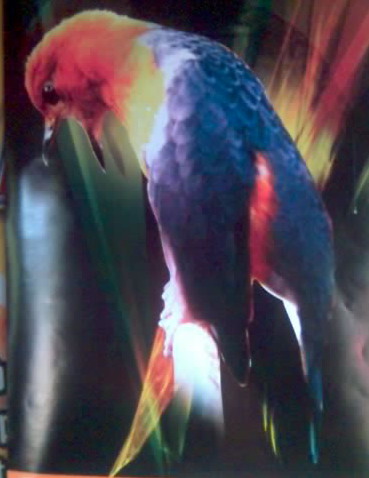
Red Anis Bird Original From Indonesia


Author: mas isom
With Full Patience and Routine Maintenance
Red Ahttps://blogger.googleusercontent.com/img/b/R29vZ2xl/AVvXsEjECZqFFM727Hzq6KsKKvBaHdhkBUsQ8fQA7F5X6c-50fcZU2ZxjOl2P6zKv6elKUFepm6HHPxXpFdw0ZHEe3hwsUgbh-n54XtPTOdWvGf_kicDFjUEXXplCAYJr6SSmj8Tno8Lyihh5ZQ/ teler 2.jpgnise is native bird of forest in Indonesia which is one of Indonesia's natural wealth is protected by the state.

The most important factor that can be jazzed red anis are age, most red anis if maintained since trotol at the age of 8 months can learn to get high. some red-mania said that jazzed on the red anis a character that can not be formed so already from the design, but there is also a saying can be conditioned through parawatan.

Character drunk on red anis believed to be a behavior (action) to attract a mate, singing along with the melodious songs (singing) when the red anis experiencing the desire. if true, it could be said that the red anis can get high if in a state of lust, so there's no other way to memibikin red anis jazzed to be able to quickly bring up properties except lust.

Various kinds of ways to increase lust in red anis, but in general it can be said that routine maintenance includes bathing and giving extra drying fooding are paramount to speed quickly anis red for jazzed.

1. Bath Jemur
Anis red is a type of bird from a relatively temperate habitats so cold bath is a necessity that can not be left to maintain the hair to keep it beautiful and largely red-mania says that a shower can reduce the desire and make work more stable red anise. mengenahi portion can shower 1 or two times a day, morning and afternoon / evening but most of her red bathing mania red at night with their respective reasons. every morning birds released (condensed) until the rising sun is drying, carried out routinely maximum of 2 hours or can be customized with custom, drying is needed by all living things including the type of poultry due to the sun between 7:00 to 9:00 very bermanfaa for birds to accelerate metabolism, metabolism nice if possible to be more healthy birds.

2. Extra Fooding
- Cricket. assume that the crickets chirping mania may increase the power, so jangkri absolute given. about 2-3 tail portion may be given morning and evening but that depends on each bird in essence how the red anis able to work optimally with the right portion jangkring.

- Kroto. Kroto is given for the birds become more healthy, so diligent sound, because it contains high protein Kroto relatively easy to digest, so most of the red-mania recommend giving Kroto, although with different portions. Kroto generally be given only 1 tablespoon in the morning or evening, can be every day or every other day, there is also a gift Kroto down just ahead of the race course.

- Worm. anis original habitat of red worms like to eat so much of exfood a worm carried by the red-mania, according to most of the red red worm mania can make at home stoned red anis (tancep). red red on the portion between mania vary depending on custom, which gives exfood worm is only a moment before rising gantangan and some that make the worms as the main menu daily.

- Silkworm Hongkong. Silkworm Hong Kong is widely used by red-mania as levers stamina for a red anis more fight in the battle over gantangan, mostly red caterpillar hongkong mania using only the eve of the race turung or shortly before boarding gantangan, but there is also what makes caterpillar hongkong as a daily menu, all depends on the habit.

if red mania perform routine maintenance and full of patience can also deploy an how care as above, it is possible red anise would reach a maximum level of desire and will can make your red anise sounds so diligent and stoned (action) to attract a partner.

Printed red times mania had other experiences mengenahi red anis care that can make quick hangover, please write the commentary might be useful for mania the other red.

Enhance Your Backyard Bird Watching


Author: Raja
Backyard bird watching is one of the most relaxing and inexpensive hobbies you can persuade along with family and friends. It is fun and at the same time educating as you can learn a great deal about your environment and survival from backyard bird watching.
The Must Have Equipment for Backyard Bird Watching: Birds are very sensitive to sound and presence of humans and therefore you must place yourself as far away as possible in order to watch the bird behave in their original manner and the only way to observe them closely from a distance is through binoculars. Most of us who take backyard bird watching seriously will also keep a journal to record all types of birds you see in and their different behavior as well. It is fascinating to go through the pages of your journal each year and observe some of the same birds returning at almost the exact same time of the year; you will find yourself waiting for them and predicting the time of the year by the types of birds you see in your backyard.
Attract Birds to Your Backyard: There are many ways in which you can attract birds to your backyard so you can observe different types of species and the most common practices are installing a fountain or birdbath where they can find relief from the scorching summer sun or quench their thirst; you can provide a feeding cage where you can place seeds that will attract a wide range of birds year round as they learn of its existence and you can provide some nestling facilities, which birds may adopt as their home and return every winter to it. Backyard bird watching can turn into an adventure everyday if you dedicate time to this hobby. You will find yourself almost recognizing the different types of birds each year without having to look up its description. You will also learn their behavior and habits.
Helpful Tips: When preparing for backyard bird watching, ensure you have plenty of water and some high energy snacks especially when you plan to spend several hours under cover entertaining your hobby. Hats during the summer time and a baseball cap in winter will protect you from the sun and cold respectively. Birds are fascinating creatures to observe and with time you will find yourself planning for bird watching vacations especially if your family enjoys the same backyard bird watching hobby as you do.
bathroom colors | bathroom design | flooring

Why Build Birdhouses?


Author: JenniferCole
Nothing feels more useful then constructing something with your personal hands. The act of creating something is pleasant for the frank fact that there is something solid to show for . When you use simple birdhouse plans you will tickle yourself, and the feathered friends.


Having a labor of love is a divine way to feel at ease and relieve nervousness and creating a bird house is a way for you to declare your creativity. When you have a good amount of simple birdhouse plans you too can give your creations as gifts to those who have cherished your work. A gift that you've produced with your own hands and more collectible and dearest for a long time. You may without warning have people asking you to make them a birdhouse for their lawn and you will once again need simple birdhouse plans to fit the individual and birds you are building the birdhouse for.


Creating a birdhouse design is one of the funny pleasures of life. You can use your perceptibility and, assuredly, create something exclusive. Like humans, birds are decidedly careful choosing a home. Many are very picky about the distinct looks of their abode. Each class like wood ducks, blue birds or purple martins are unlike when it comes to selecting a home. Depending on the category you want to attract. Designs of the birdhouse can be small or excessive. It's imperative for you to find birdhouse plans that are relative for that breed .

Alluring birds to your backyard makes your property look inviting. A lot of type of birds bring some surprising sounds . The simple birdhouse plans to build in your yard are micro houses, which must have commanded interior. Birds are much more likely to associate with the insides of the birdhouse then the outside. This means you could add on many exclusive touches to the outside of the birdhouse. When you engineer a simple bird house, it is extremely delightful to know that a flying friend has decided to make a lodging from something you wholly made for them.

If you are a man who is able with tools and likes in full swing with your hands and wood, you can win so many simple birdhouse plans that will make your backyard a place where the birds will want to nest. If you like to manufacture things, then a shop bought birdhouse just won't do. Get busy and look for simple birdhouse plans to allow you to boast your talents.

Whether you want an normal birdhouse or something straightforward and easy to check your skills, you can find just what you want . You can find tips and info for finding simple bird house plans to make your patio a more wonderful place for both people and birds. You can find a wide selection of simple birdhouse plans .

Using simple birdhouse plans, you obviously can design an inviting birdhouse for flying creatures.
It's very pleasant to construct a habitat where your feathered friends can easily elect to hang out in. When it comes to the nitty-gritty of their house most feathered animals are very strict. If you have an express variety of feathered creature in mind that you would wish to interest by building a birdhouse, then it is elemental to get hold of simple birdhouse plans that suit that particular group .

Using wood is the best but aluminum or plastic is ok with simple birdhouse plans.
There are simple birdhouse plans that come as birdhouse kits and simple birdhouse plans for kids.
There are cardinal birdhouse plans, wren birdhouse plans, chickadee birdhouse plans and many more birdhouse plans.


How to Attract Wild Birds


If you would like to attract a large number of wild birds, you will need to understand what to do in order to make birds want to live at your house. Having a number of bird feeders place about in plain view will always catch the eye of a hungry bird flying by your yard or garden. So placing a bird feeder pole as well as the bird feeder in your yard or garden is the first thing you need to do is you want an abundance of fine feathered friends.
When you place the bird food in a place that is more available for the birds, they will find it and stay around much longer. Down below are some details that will help you to figure it out.
Pick a spot in which the extra of seed, feathers, and bird droppings won't become an issue. There are certain kinds of seed that have treated with additives that will not harm the wild birds but also will not germinate so as to sprout weeds of the type of grass in your yard that you do not want. Don't forget this when choosing the place that you hang or mount your bird feeder. The peak of the bird feeder pole should be is set at a height dependent on which type of birds you're trying to attract. Do some research on this. This means you may have your feeders at different heights. Now you know that some birds favor platforms or trays to feed on as opposed the hopper or tube feeders. Make certain to you use of a couple of different types of platforms around your birding area. These platforms can sit on the bird feeder pole, or hang from a tree limb.
There are many birds that are ground feeders and can almost certainly consume up the seeds that other birds push from the feeder. This may help greatly in getting a the area cleaned up from the mess the birds generate. You will not have to set out additional bird seed for these kinds of birds. The birds that throw seed about birds will drop sufficient to feed them.
Birds locate their meals by sight quicker than finding it by smell. So make sure your wild birds can simply see the feeder in an open location.This way they are going to migrate swiftly and let other birds know where the seed is by their chirps and bird songs. Locate your feeders in areas around the property that will help the birds to feel safe and relaxed from predators like cats, but will also allow you to observe them without them being frightened by your presence. It truly is great to find yourself in a position to look at them without them knowing you are watching from a window of your house. Using this method it is possible to see the birds for several hours if you would like. It is very important that you not forget this once you are prepared to put up your wild bird feeder. You need the place to be easy to get to so you can load the feeder with fresh seed on a regular basis. Be sure that you can easily fill your feeders even in bad climate conditions, you would want to be able speedily refill your feeder when it gets low. Also, find your feeders close to some type of safety for the wild birds like trees or shrubs. By undertaking this the birds have a safe area wherever they may be perched. You will want to protect the bird feeder pole and bird feeder from being torn up or abused by squirrels or other seed eating rodents. Similarly, your outside cats really should be kept as far away from your wild bird feeders so you wont be having more problems pouncing within the birds and killing off what you have worked so hard to love and observe.
If you follow the guidelines previously mentioned, you need to look around to find a bird feeder pole and bird feeder now. You will have many hours of pleasure viewing the birds that come and go. It is also exhilarating to start a journal and document the kinds of wild birds that pay a visit to your bird feeders. This really is referred to as existence checklist by skilled bird watchers. So have a good time and put in place some feeders for your feathered close friends.
I hope this article has inspired you to want to read and learn more about wild birds. If it has please check out more of my articles.

Bird House Basics – Do's & Don'ts


Author: Angie
Like weather vanes and sundials, bird houses can be as artistic as they are functional. Bird houses come in many styles, from gaily painted wooden antiques to sleek metal models to plain old wooden ones. However delightful they may look to you, you'll want to make sure the birds find them attractive as well. Learn about what birds use bird houses and how to acquire the most success in housing wild birds.

Cavity-Nesting Birds

Only cavity-nesting birds (those that nest in tree hollows) use bird houses. This group includes bluebirds, chickadees, nuthatches, swallows, and wrens. The type of bird house you install determines the kinds of birds you'll attract. However, this is a most inexact science as a bird house may be intended for a wren or a bluebird, but it will be fair game for any birds of similar size that find it to their fancy. This can be a fun feature to providing bird houses in your backyard.

Small Birds

Small birds, such as chickadees, nuthatches, and most wrens, prefer a hole that's 1 1/8 inches across. Medium-size birds, such as bluebirds, swallows, and purple martins, need a nest box with a hole 1 ½ inches wide. White-breasted nuthatches need a 1 ¼ inch opening.

Larger Birds

Larger birds, such as flickers and kestrels, take boxes with 2 ½ inch entry holes. Flickers usually like to dig out their own nests, but sometimes you can attract them with a large nest box. If you happen to fill it with wood chips, they'll dig it right out.

Do's & Don'ts

To keep bird houses safe from raccoons and cats, mount the bird houses atop metal poles. If you want to put a bird house in a tree, hang it from a branch. If you supply bird feeders in your yard keep the bird houses away from the feeders. Mealtime can make nesting birds nervous and scare them off. Wherever you plan on putting your bird house make sure the entrance is facing away from any prevailing weather. You can also remove the perch if your bird house comes with one; they are unnecessary and house sparrows may sit on them to heckle birds inside the bird house. When choosing a bird house make sure it's made of good insulated material. Bird houses made out of at least 1-inch-thick wood usually is good insulation. If you make your own bird house, steer away from using plastic milk cartons as they are too thin and have poor ventilation. The heat created with this kind of material can bake chicks inside or make them fledge too early from your bird house. You'll want to make sure you can easily clean bird houses so look for an opening at the top or side of the house. Also drain holes in the bottom of your bird houses and ventilation holes high in the sides of the house for summer heat are good things to watch for. Bird houses should be up before migrant season begins around late February because they will be looking for nesting sites soon after they arrive. And lastly, if you decide to put up more than one bird house keep them well separated and out of site from one another. Just like humans, birds most like their space!

These bird house basics should get you off on the right foot. After deciding which types of birds you want to attract and choosing the right bird house for them, you should start to see a more active wild life in your backyard. Providing bird houses in your lawn or garden is a delightful hobby. Enjoy picking out your bird house or bird houses because there a lot to choose from.
Article Source: http://www.articlesbase.com/bird-watching-articles/bird-house-basics-dos-donts-2863381.html
About the Author
My name is Angie and I love the outdoors. I sell lawn & garden decor from my online store and strive to provide the best quality and largest variety of lawn ornaments I can. My store provides a lot of cute ideas for people to decorate their outdoor space. Personalize your lawn & garden today with adorable garden statues, stepping stones, bird feeders, bird houses, wind chimes, wind spinners and much more.
http://www.outdoormama.com
http://www.outdoormama1.blogspot.com

Why Feed Birds Anyway?


Author: Lisa Dorsel
Why Feed Birds Anyway?
Well, all you need are a bird feeder and seed, for one. But, in my experience, there are several more reasons that I would like to share. So you know; I've been a rural person for many years. And, when the kids were young, it was not uncommon to have geese or ducks co-existing in our yard.
Flight
At one point, we had three or four geese and, basically, they had just occupied the yard for some time. Geese are a feisty bird, and don't mix well with humans, but I guess we really didn't know until we experienced the nipping and the chasing first hand. At any rate, we had endured them for months. And then, one day, when I was in the yard, an entire flock of them were passing way up high, and right over the backyard. Of course, I could hear them and so could our geese. In just a few moments, they began to run and they took flight. They would join their kind and a life they were suited for and I was in awe. May I suggest that flight equals freedom in our minds and we see it all of the time. Do you escape, if only for a moment, when you see a bird in flight?
Poppy
Poppy was our lone duck at the time, and he developed a ritual that took me a while to explain. He took to the road! Repeatedly, he walked maybe thirty feet up the road, crossed to the other side, and up a driveway leading to the church that we attended. I noticed this and then I began to notice the neighbors, traveling to and from home, just inching, patiently, behind him. They were awesome, dubbing him the "community duck". So, one day, I was at the church and Poppy arrived. There he stood, content and looking in the window. He was looking at one fine specimen of duck! In retrospect, we should have had another duck, to keep him company. You may have lone birds coming to your bird feeders, but generally, they will come in groups and on a daily, even hourly basis.
Mom
And, of course, there is the beauty of nature. One of our ducks had wintered under the big Blue Spruce in the yard, whose branches touched the ground. And, all of us just went about indoor living until spring. So, on a warm and sunny day, I was walking in the yard when something caught my breath and I stopped. It was the eloquence of nature. One momma duck appeared from beneath the tree with about ten ducklings, in a perfect row, following behind her. Believe me, you want them to survive; to stay alive! But do you pin them up or bring them inside? No, you stand and watch. They went to an undisclosed location of their mothers' choice.
If you would like to feed wild birds, please be encouraged and keep this in mind; winter is the most difficult time for birds. Our ducks would slip and slide on ice and snow and often fall prey to predators. Shelter is much less abundant in bare trees. Fruit, nuts and berries are more difficult to find and insects lay dormant. Temperatures dive and our feathered friends need high energy food to produce heat. Please visit www.polypolly.com for your eco-friendly wild bird supplies.
Article Source: http://www.articlesbase.com/bird-watching-articles/why-feed-birds-anyway-3307925.html
About the Author
Lisa Dorsel is the owner and President of www.polypolly.com, an eco-friendly website featuring wild bird supplies.

Do Wild Birds Recognize Faces?


Author: Bill Askenburg
A few weeks back, a mourning dove nested in a hanging basket at the doorway of our well-traveled mudroom. We have taken great care not to threaten the nest, and our courtesy has paid off. We have a front row view of the nest - watching the nestlings grow into fledglings, soon to fly away.
Even though we have been careful not to disturb the nest, I was surprised that the doves stayed and flourished. They appear relatively comfortable and unchanged when we are around. Conversely, they become alert and even fly away, if a stranger comes near.
Do the doves know and trust us? Is it even possible for a wild bird to recognize and remember a particular person? Yes, they can.
Wild birds can identify individual people and remember if they have threatened them in the past. In a recent University of Florida study, mockingbirds recognized and took an aggressive action towards test individuals who had approached their nest over a five day period. Similarly, the mockingbirds ignored other passersby who had not approached the nest before.
The study concluded that mockingbirds could clearly recognize specific individuals, retain negative perceptions about those individuals, and accomplish this within a brief amount of time.
Another study done by wildlife biologist John M. Marzluff at the University of Washington revealed that birds can identify and remember faces. Marzluff tested the reaction of crows to individuals who wore masks on campus.
Crows were trapped, banded and released by individuals wearing a designated “dangerous” mask. For a number of weeks after the crows’ release, individuals wore “neutral” as well as “dangerous” masks around campus. The subjects in “dangerous” masks were harassed and scolded more than those individuals who wore “neutral” masks. From these results, Marzluff concluded that the crows recognized faces separately from that of clothing, gait and other individual characteristics.
So the next time you pass a wild bird, consider offering a polite nod and smile as you walk by - you may be making a new a feathered friend rather than a foe.
Article Source: http://www.articlesbase.com/bird-watching-articles/do-wild-birds-recognize-faces-962023.html
About the Author
“by Bill Askenburg, Owner - New England Birdhouse. We specialize in fine architectural bird houses and feeders, offering handcrafted custom and stock replica bird houses and backyard birding supplies and garden decor. For more information or articles please visit our blog.”