Michigan's Kirtland's warbler reached record-high numbers in 2012

The Department of Natural Resources (DNR) released recently Michigan's annual survey information indicating the population of Kirtland's warbler, a federally endangered bird, has reached an all-time high. "We are witnessing a conservation success story," said DNR endangered species coordinator Dan Kennedy.

A male Kirtland's Warbler from Wikipedia
Biologists, researchers and volunteers in Michigan observed 2,063 singing males during the official 2012 survey period - 1,805 males were observed in 2011. This represents the largest single-year increase since 2007. The lowest numbers were recorded in 1974 and 1987, when only 167 singing males were found.

The endangered Kirtland's warbler is one of the rarest members of the wood warbler (Parulidae) family. It nests in just a few counties in Michigan, Wisconsin and the province of Ontario and nowhere else on Earth. The male Kirtland's warblers' summer plumage is composed of a distinctive bright yellow colored breast streaked in black and bluish gray back feathers, a dark mask over its face with white eye rings, and bobbing tail. The female's plumage coloration is less bright; her facial area is devoid of a mask. Overall length of the bird is less than six inches.

Kirtland's warblers typically nest on the ground in stands of jack pine between 4 and 20 years old. Historically, these stands of young jack pine were created by natural wildfires that frequently swept through northern Michigan. Modern fire suppression programs altered this natural process, reducing Kirtland's warbler habitat. As a result, the population of Kirtland's warblers declined to the point that they were listed as endangered.

To mimic the effects of wildfire and ensure the future of this species, the DNR, the U.S. Forest Service and the U.S. Fish and Wildlife Service manage the forests through a combination of timber harvests, burning, seeding and replanting to promote habitat for the Kirtland’s Warbler and many other species, including snowshoe hare, white-tailed deer, other songbird species and rare plants. This use of public lands also creates jobs, as well as brings birders and hunters from across the state and around the world to northern Michigan.

The winter range of the Kirtland's warbler is in the Bahamas and in the Turks, Caicos, and Hispaniola islands. For more information on the Kirtland’s Warbler go to http://www.allaboutbirds.org/guide/Kirtlands_Warbler/id.  

Starling


Scientific Name: Sturnus vulgaris

Size:                          21.5cm 

Weight:                  75 - 90g 

Wingspan: 37 - 42cm 

Lifespan: 5 years 

Breeding: mid-April 

Number of Clutches: 1-2 

Number of Eggs: 4-9 

Incubation Days: 12-15 

Fledg Days:           20-22 

Habitat:                   Urban and rural settings such as farmland, parks, gardens, towns and sewage farms. 

Distribution:   Europe (except Iberia, Greece), c Asia, WINTERS: s to n Africa, s Asia, INTRODUCED North America, Australasia 


Description


The Starling is quite an unruly bird, noisy and scruffy looking and often in groups seemingly mobbing feeding stations and gardens in a chattering mass. In summer the birds have black-brown feathers with a green and purple iridescence, slight buff edges to the wing feathers, red-brown legs and a long yellow beak with a patch of colour at the base signifying sex, males have blue and females pink. In winter the iridescence fades and white speckles form over the entire upper and lower parts although they are somewhat less pronounced on the wings and rump of the male and the bill fades to a dark grey-brown. Juveniles are grey-brown with a light cream colouration on the throat and large white speckles on the under parts. They have a fast and direct flight and with their triangular and pointed wings drooped back look like little Harrier jets coming in to land in the garden.

Nest


The male builds the nest from grass in a hole in a wall, tree or building, but the female lines it with feathers, wool and moss. The male may decorate the nest with leaves and petals in order to deter parasites and improve his chances of attracting a mate.

Feeding


Starlings seem to feed on just about anything: insects, worms, snails, berries, fruit, scraps, suet. However, they feed only invertebrates - not "junk" food - to their young. Their beak is used to probe the ground and is powerful enough to be opened to part the ground and reach food that is buried, they can also swivel their eyes forward to look along the length of their bill to the area they are probing. They are often found with Lapwings in wetland areas, where they feed on the food that the Lapwings have disturbed - this is called commensal feeding.

Legal Status


Starling populations have declined seriously (by over 70%) in recent times and are on the Red List of birds of high conservation concern. There are several causes of this decline: changes in farming practices, changes in grassland management, loss of invertebrate food through the use of pesticides, fewer nesting sites in urban areas owing to household improvements and poorer survival rates among young birds.

Voice


Starlings are great at mimicry, with examples including machines, such as telephones and car alarms, and other birds such as curlews and Pied Wagtails. Consequently, it's difficult to know what their song is other than a medley of squeaks, clicks and whistles. Male Starlings can be heard singing throughout the year except when they are moulting in July and August.

Red-Wattled Lapwing


Description

KingdomAnimalia
PhylumChordata
ClassAves
OrderCharadriiformes
FamilyCharadriidae
GenusVanellus
The boldly patterned red-wattled lapwing (Vanellus indicusi) is named for the vivid red, fleshy, wrinkled skin, or wattle, in front of each eye . This wading bird has greyish brown upperparts, except for the jet black head, neck and upper breast . A broad white stripe extends from each eye down the sides of the neck, drawing a clear line between the black and brown plumage. When in flight, the white rump and tail can also be seen, with a broad black band extending across the tail. The bill of the red-wattled lapwing is red with a black tip, the eyes are reddish-brown, and the long legs are bright yellow .
The male and female red-wattled lapwing are similar in appearance, while the juvenile has duller plumage. The juvenile also has a white throat, a greyish-brown breast and a white speckled crown .
A noisy bird, the red-wattled lapwing utters its loud cry both during flight and when on the ground. The call is a series of loud, shrill notes, expressed well by the words ‘did-he-do-it pity-to-do-it’.
Four subspecies of the red-wattled lapwing are normally recognized: Vallenus indicus aigneri, Vallenus indicus indicus, Vallenus indicus lankae andVallenus indicus atronuchalis . Each subspecies differs slightly in the coloration of the upperparts and in size, but more significantly in the glossiness of the plumage. The subspecies V. i. lankaeis the smallest, darkest and glossiest, while V. i. aigneri is the largest and palest .
Also known as
red-wattled plover.
Synonyms
Hoplopterus indicus.
Size
Length: 32 - 35 cm 
Wingspan: 80 - 81 cm 
Weight
110 - 230 g 

Crow


The Crow is believed to be the most intelligent of all birds.  When trying to open nuts, it will purposely place them in the roadway so cars will crack them open.  Crows are identified by their black feathers, black eyes and the caw-caw sound they make.  Adult crows have a light violet gloss on their body and a greenish blue gloss on their wings.


Crow Food Sources

Crows thrive mainly on corn, thus the reason scarecrows are put up in corn fields as well as other food crops and gardens.  They damage corn crops by tearing open the cobs and exposing them to the weather.  These birds can be seen sometimes following a plow so that they can feast on exposed earthworms.  Although they cause damage to corn crops, crows are very beneficial to farmers by eating the June bugs, grasshoppers, weevils, and other insects that affect farmers’ fields.  They also eat bugs, worms, road kill, mice, berries, spiders, millipedes, snails, salamanders, lizards, small mammals and fast food leftovers.  Crows like to store any excess food they may find.  They usually hide food in areas such as trees or in rain gutters.


Mating, Reproduction Habits of Crows

When courting, the adult crow fluffs his feathers, struts and fly in circle to attract a female crow.  Once mated, the male and female crows stay together for life. Both take turns sitting on the 4-6 eggs in the nest.  When building the nest, younger birds help build the nest and bring food and water to the mother to be.  Building a nest usually take 1-2 weeks of gathering leaves, moss feathers, grass, twigs, and sticks. Baby crows stay in the nest up to 2 months before leaving.  Adult crows can live up to ten years and are 21 inches from beak to tail when fully grown.

Crow Roosting and Migration

Crows are found all around the world except in New Zealand Antarctica ad South America .  They are found mainly in agricultural lands, farmland and woodlands.  During the fall and winter months, crows “roost” together in packs.  Roosting protects them from predators and always revolves around a major food source.  Crows usually wait nearby until dusk before finding their roosting spot.  Roosts can grow from 100 to thousands of crows.  They have been known to migrate a few hundred miles away from their roost to search for scarce food and then return to the roost at night.
Crows are both migratory and resident.  The Northern Crow usually migrates in the fall through January when the weather can get down to 0 degrees.  Crows have been known to travel over 1500 miles to migrate to agricultural lands.  Southern crows normally do not migrate as do their northern cousins.
Crows can sometime be mistaken to be ravens and vice versa.  Between the two, the Crow is the smallest.  Although the raven is black like the crow, it is the largest of the two species and has a shaggy throat feature as well as a wedge shaped tail that is most recognized when flying.  When in flight, the raven's tail is fanned out.  Ravens also soar more than crows.
More so than most other birds, Crows are also very territorial.  They will come to the aid of unrelated crows in need of help or distress.  Owls and hawks are their main enemies.

Crow Control - Safe, Humane and Effective

As fascinating as these intelligent birds can be to watch in action, there are times when they become a pest, as well as times when they are beneficial.  Crows are helpful when it comes to getting rid of road-kill on our roads, highways and Interstate system.  Animal carcasses are picked at until light enough to be carried out of the path of passing automobiles.  But these birds are usually considered a pest when they come into contact with humans and structures not built as bird houses.  Damage from crows can be tremendous in areas of agriculture as well as health hazards and other damage around people, buildings, airports and many other such areas.

Just a Thought from two sister WBU stores in BC Canada

I started this blog to share observations about local nature and what’s going on in our Wild Birds Unlimited East Lansing, Michigan store. But did you know there are almost 300 Wild Birds Unlimited (WBU) stores across the US and Canada? 

Today I asked one of the WBU’s 2300 miles west of us in British Columbia, Canada to share what’s happening in their neck of the woods. Sherry and Cliff Jury own the WBU's in Abbotsford BC and Chilliwack BC.

Sherry Jury provided us with her lovely observations below:

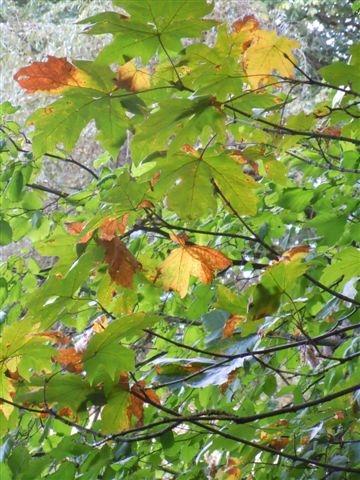
I always think of Mother Nature using October as a time to change her wardrobe. Gone are the bright greens, blues and purples. Now, for a brief moment, the colours of yellow and orange reigns supreme until they are replaced by dull browns and greys.

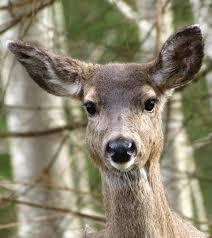
Our deer are certainly that colour now. We don’t have as many as we usually do (I hope that they are well), just the yearling and one doe and fawn are living in the back. Their coats now are a beautiful dark grey with a dark muzzle and white throat - very striking. They are still enjoying eating what is left of my violets and lady’s mantle plants but newly fallen leaves have been added to their diet. I thank them for their help with the leaves. There will be plenty to go around!

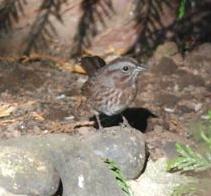
Our song sparrows are fighting for spots in the yard. One is claiming the front yard, two are claiming the back - unless both are fighting for the creek area, not sure there. They are singing happily in the willow and cedar trees and I must admit, they are improving. Their song now sounds like one a song sparrow should sing. Each has added their own little flourishes and trills to make his song unique and sound nothing like how our old song sparrow sang. We will see how successful they are at attracting a mate in the spring, if they still live here.

The first juncos have also arrived to lay claim to the back yard. These are the dominant males of the flock and they certainly act like it. Our current juncos are fat and healthy and are constantly chasing each other away from any scrap of food they find below the feeders. I notice they also have a wide space around each other when feeding unlike what occurs when the other birds arrive. Then, everyone feeds, fights and lives together in one big, feisty family. Not now, these guys are too important to mingle.

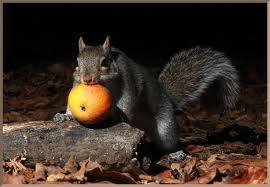
Everyone is eating more as nights are started to become cooler. Our squirrels are enjoying the extra apples on the trees. It is funny to watch them carry an apple around (they usually are as big as their heads) in their jaws and then try to bury them. But they don’t dig a hole. No, our squirrels sort of try to just push the apple in the dirt, hoping that by some miracle, it will bury itself. Dirt-covered apples, yummy.

~ by Sherry Jury
Home page: http://fraservalley.wbu.com/  
Facebook page: http://www.facebook.com/wbu.fraservalley.
.

Hoopoe

Scientific classification
Kingdom:Animalia
Phylum:Chordata
Class:Aves
Order:Coraciiformes
Family:Upupidae
Genus:Upupa

Species:U. epops

I guess the first impressions you get from seeing a Hoopoe for the first time is a mixture of the comical as well as the beautiful! With its striking colours and very distinct black and white wing pattern the Hoopoe is a favourite among even the most casual observer.
The Hoopoe is a one-off polytypic species and is distributed widely throughout the Western Paleartic, but is only a resident in southern Spain, northern Africa, Egypt and the Lebanon. It is one of those birds whose presence during the winter months can more than make-up for the cooler temperatures.
In Andalusia we are fortunate to see these beautiful birds all year round and of course during times of bird migration the local birds are joined by those passing through on their way to northern and central Europe. Although a bird essentially of level or gently undulating terrain that has good areas of bare surface i.e. silt, rock and sandy soils, they have taken to the grassed golf courses of the Costas and are a common sight in coastal areas.
They can be seen at varying altitudes within the province ranging from sea level to well over 1400m above. Here Mole-crickets and beetle larvae form the bulk of their diet, although they show a great liking for both larvae and pupae of butterflies and moths. So mostly their diet is insects and almost entirely animal, they are also known to take lizards, frogs, toads and very rarely bird eggs!
It has a long and thin bill which suits probing soft ground and under leaf litter where I have seen it take millipedes and centipedes, but once I saw it grapple with a small scorpion and this makes the bird a friend of mine!!
Hoopoes nest most commonly in the holes of trees, but are also known to use buildings and ground holes. Normally between 5 and 7 eggs are laid and incubation can range from 14 to 20 days. The young, which take anywhere from 26 to 29 days to fledge, are at first brooded almost continuously by the female and are fed by the female until almost ready to fledge when the male, although always the provider in the earlier stages, will also directly help feed the chicks.
It is when the young are over 6 days old that they are able to largely prevent unwanted attentions from predators and of course yours truly. When disturbed they can exude an evil and intolerable smelling fluid from enlarged and modified oil glands and if this wasn’t enough they acquire the dubious ability to forcibly squirt a hatful of liquid faeces and gut contents accurately over a distance of 25 to 30cm. It is a good reason for telling people to pronounce the name Hoopoe as ‘Hoopoo’!!

Photo share: A Little Fall of Rain

I always wonder about raindrops. I wonder about how their always falling down, Tripping over their own feet... And forgetting their parachutes as they tumble right out of the sky to an uncertain end. ~ by Tahereh Mafi author of Shatter Me
Thank you for sharing your photos! If anyone else would like to share a photograph of nature send it to bloubird@gmail.com and I'll put it on the Friday Photo posts. 

Related Articles: