Brown bark-colored moth with orange stripes on body

Today I just happened to see a Carolina sphinx moth outside the East Lansing, Wild Birds Unlimited store. Many gardeners might be upset to see the green Tobacco Hornworm (Manduca sexta) devouring their potato, tomato or eggplant leaves but this green caterpillar eventually completes a metamorphosis into a large fascinating bark-looking moth with an orange striped abdomen.

These moths are important pollinators of deep-throated, night-blooming flowers. While they extend their long proboscis into different flowers to collect nectar, pollen grains stick to them and the plants become pollinated.

While I was looking up this information, I just happened to discover a press release about a recent study out of Duke University:

A new explanation for how caterpillars know when to start the transformation into moths or butterflies.

Caterpillars molt four to five times before morphing into an adult as a moth or butterfly. Duke University biologist Fred Nijhout knew from earlier work that Tobacco Hornworm caterpillars, only start a molt when they reach a critical weight.

In the new study, Nijhout and his graduate student, Viviane Callier, measured the size of the caterpillar's respiratory system. They found that the insect's tracheal tubing is fixed in size at each stage of its larval life. Other parts of the caterpillar's body can grow, but not the respiratory tubing. As a result, the insect eventually begins to suffocate. The only way it can continue to mature is to shed the old tubing for newer, longer ones.

This is the first time scientists have figured out a factor -- in this case, lack of oxygen -- that regulates an animal's body size during specific developmental stages, said Nijhout, who led the study. The research appears online in the Proceedings of the National Academy of Sciences.

Body size is a fundamental trait for all organisms and affects everything from how they move to the mates they choose. In humans, size, measured as height, is also associated with risks for disease.

In the new study, Nijhout tested oxygen's effects on the caterpillars' body size by placing the larvae into airtight glove boxes and pumping in air with different amounts of oxygen. Under hypoxic conditions, the caterpillars molted at body sizes well below the critical weight. And, despite the caterpillars doubling in body size during the growth phase, they did not increase the size of the tracheal tubes, according to the results.

Harrison said that together, these observations suggest that insects molt to the next juvenile or adult stage partly to ensure that their oxygen delivery capacity can match the oxygen needs of the tissue.

Because the research is specific to caterpillars, it cannot explain why humans grow to a specific size. But, Nijhout said, caterpillars' abdomen-based, low-oxygen sensor may be related to the system that produces insulin-like growth hormones in humans, and studying it further could provide information about a broader biological process that affects how diverse organisms travel their paths to adulthood.

Sources:
-Species Detail: Carolina Sphinx (Butterflies and Moths of North America) http://www.butterfliesandmoths.org/species/Manduca-sexta

Related Articles:
-Tiger moths: What is that white moth with black spots?: http://bit.ly/rtneuz
-A Very Tiny Hummingbird (Moth)?: http://bit.ly/qtrAaV
-Moth With Twelve Inch Tongue: http://bit.ly/pcs0TV
-Why did I take a picture of bird poop?: http://bit.ly/o9APHb
-Where does the Woolly Bear go in the winter?: http://bit.ly/pB5L4V

Do Birds Have Thumbs?


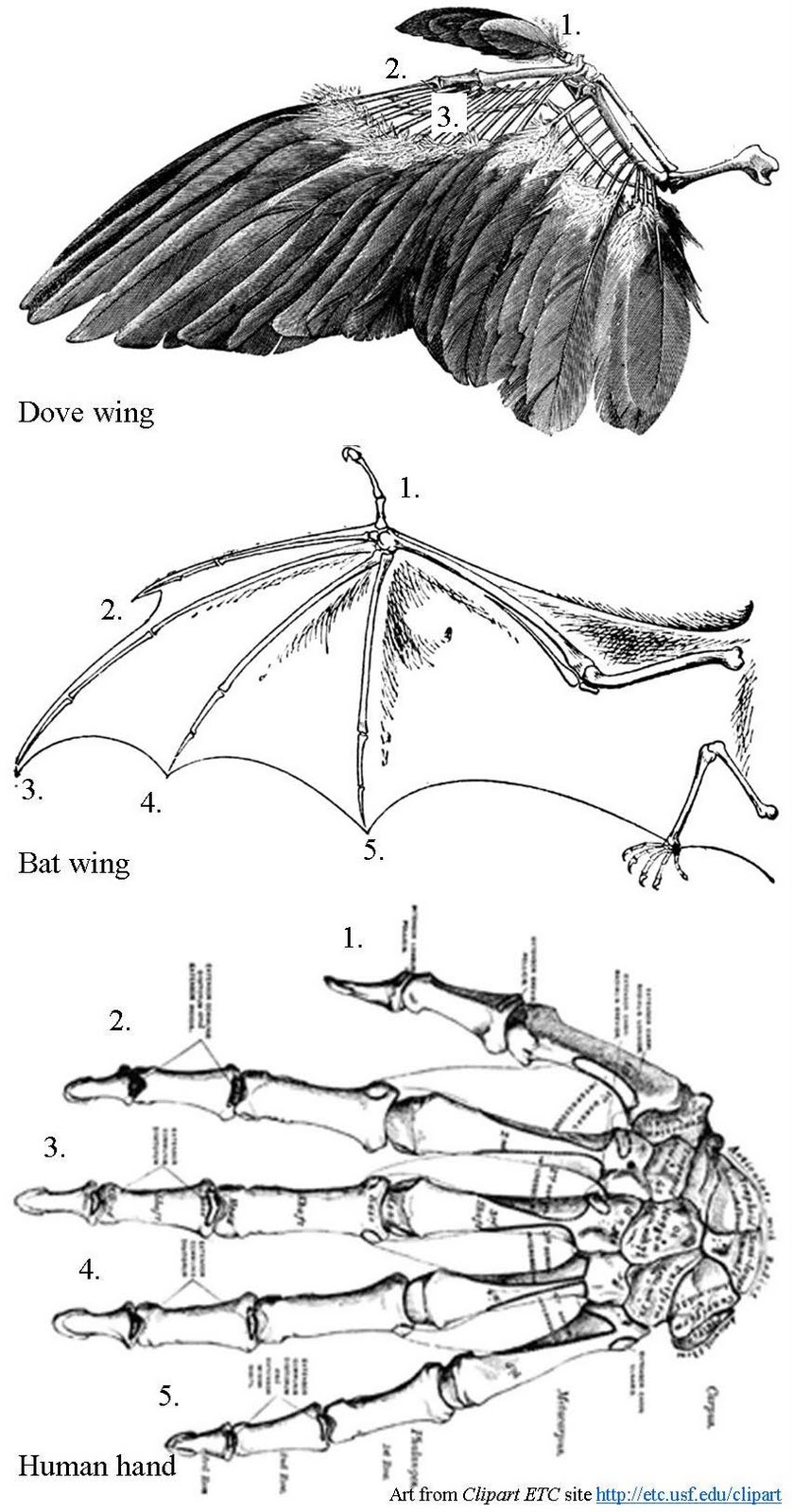
Have you ever wondered if birds have wing thumbs under their feathers? Because of conflicting evidence, debate has flourished for more than a century as to whether the three-part bone structure of a bird wing corresponds to the thumb, index and middle finger, or to the index, middle and ring fingers.

Working with chickens, researchers from Yale University led by Dr Gunter Wagner used a technique called gene expression profiling to solve the digital mystery. The new study published online in the journal Naturesays the innermost digit of a bird's three-pronged wing acts a little like both a thumb and an index finger.

While still in the egg, scientists found the stemcells of bird embryos that normally produce the first digit die off during early stages of development, and the cells programmed to manufacture the index unit give rise instead to a thumb-like appendage.

Human and primate hands and feet have five fingers or toes each; birds have three in their wings and two, three or four digits on their feet.

Sources: 
Art from Clipart ETC site http://etc.usf.edu/clipart

Related Article: What are Some Differences in Birds' Feet?: http://bit.ly/q2i09D

Does Nyjer Thistle Seed Go Bad?

I have been looking for a while now and thanks for this piece as I had found Nyger or Niger seed information very scarce. This page is more useful to me than Wikipedia so that's great..! I have a question please:

Since we introduced a Niger seed into our garden in the UK about 6 weeks ago the birds are rarely here. I did read somewhere else that if the Niger seeds "go off" they can put off birds plus we do have a Sparrow Hawk around also which it may be but they - i.e not Finches really don't seem to like it? Anyone else had problems with Niger seeds putting off birds? Thanks! Stevie http://ukbirdatables.co.uk

European Goldfinch Carduelis carduelis
Thank you very much for the kind comments. Nyjer is a very popular seed with the American Goldfinches in the US.

There may be several reasons your finches have stopped coming to the feeders. Nyjer seed can dry out fast. Make sure your Nyjer seed is fresh. One way to do this is to pinch the seed with your fingernails and see if any oil comes out. The finches use their bills to twist the seed and sip the oil and then drop the shell. If your seed has dried out your feeder will be skipped.

European Goldfinches on a garden bird feeder in the UK
Buy your seed at a bird shop that gets in a lot of fresh seed regularly. Wild Birds Unlimited - East Lansing store has a seed delivery every Tuesday.

Make sure the feeder is clean and free of any mold. I don’t know about European Goldfinches or any of the UK finches, but American finches are finicky and avoid dirty feeders. It’s especially important to keep our American feeders clean because the finches gather in huge numbers in the fall and we don’t want them to spread diseases to each other or eat off dirty feeders.
American Goldfinch Carduelis tristis

American Goldfinches also leave the last bite on their plate. Our finches are notorious for leaving a tube feeder half full. We can’t just top off a feeder with fresh seed. We have to empty the older seed (if it's still good) into a different container, fill the bottom of the feeder with new seed and top it off with the older seed. Our goldfinches will probably eat down to that certain level again and then we’ll have to repeat the process.

There are also a lot of plants that attract finches. These birds love to flock to any flowers that form seed heads. If you garden with finches in mind, you get to enjoy them at the feeders and riding the flowers in search of seeds.

For a list of the finches in the UK go to: http://www.rspb.org.uk/wildlife/birdguide/families/finches.aspx
For a list of the finches in the US go to: http://www.allaboutbirds.org/guide/browse_tax.aspx?family=27

Related articles:
Nyjer (thistle) isn't related to Canada Thistle: http://bit.ly/nst8r4
Do I need to clean my bird feeder?: http://bit.ly/nUSOkX
Can You Scare a Hawk Away?: http://bit.ly/pa9E83

Don't take your feeders down on Labor Day: Keep your hummingbird feeders up!

Isn't Labor Day the time to take down your hummingbird feeders? ~ Dexter, Michigan 

In mid-Michigan, I leave my hummingbird feeder up until Halloween.  

The rule of thumb is: if you haven't seen a hummingbird for two weeks in the fall it's safe to take your feeder down. Depending on where you live it is usually at the end of September to the end of October.

In the fall there is an instinctual clock that tells the hummingbirds when to head south. People still disagree over the precise mechanism within the bird that causes this. Most sources say that that food supply is not a factor and there is no reason to take down hummingbird feeders to stimulate migration.

Birds that are born late in the season are vulnerable. Leaving your feeders up may provide a critical opportunity for these hummingbirds to build reserves and “catch up.”
Green: summer-only  Blue: winter-only  Yellow: migratory

Just before they answer the call to travel south, they eat in excess and build a layer of rich fatty fuel just under their skin. You can notice the extra fat along the back, belly, and throat. 

A hummingbird gains 25 – 40% extra body-weight to have enough fuel to travel 1,400 miles – with no wind of any kind. A headwind of only 10 miles per hour will cut that distance down to 600 miles and more than 20 mph will push them backward. 
However the ruby-throated hummingbird does take advantage of tail winds constantly. Southbound ruby-throats rebuild their reserves in the early morning, travel about 23 miles during the day and forage again in the late afternoon to keep up their body weight.

Hummingbirds in San Diego, California

I live in San Diego, CA and enjoy feeding/watching hummingbirds.  I assume most of the birds I see are Anna’s, but I thought I spotted a Black Chinned. My question is, do hummingbirds of different species nest, eat, etc. in the same location? Thanks, Steve

During nesting season hummingbirds never intentionally nest, eat, etc. in the same location but sometimes there is a slight overlap in territories. The average hummingbirds usually defend about a ¼ acre, but guarding the borders constantly can expend a lot of energy.

In order to conserve their strength, sometimes they narrow the defense down to a single feeder or flowering bush and allow other hummers to feed nearby. You might also witness air fights between hummingbirds or any birds that get in the way of their meal.

Hummingbirds can starve to death in a matter of hours, so they can be very protective of their food sources. You’ll see hummingbirds feeding actively during the day because they have a very fast metabolism. The nectar they consume at your feeder can be processed through their digestive system in as little as 20 minutes.

You may also be seeing an increase of hummingbirds at this time of year because the babies, which all look similar to females, are starting to visit feeders. From July to late fall, territorial claims can be overlooked, and competition at feeders increases greatly.

Migration is another reason to see different species. San Diego, CA has two hummingbird species year round, Anna's Hummingbirds and Costa'sHummingbirds and several kinds of hummingbirds that are migratory. According to the Calsbad, CA Facebook page: "The Black-Chinned Hummingbirds are  in San Diego all summer, however, they head south in September along with the other 3 hummingbirds that you only see at your feeders during migration time early to mid-September. These are: Allen's Hummingbirds, Calliope Hummingbirds and Rufous Hummingbirds."

Sources:
  1. Black-chinned Hummingbird photo from: http://en.wikipedia.org/wiki/File:Archilochus-alexandri-003.jpg 
  2. More about hummingbirds online: http://www.allaboutbirds.org/guide/browse_tax.aspx?family=62 
  3. Amazing Hummingbirds by Stan Tekiela (available at Wild Birds Unlimited)

What are those giant mosquito looking bugs?

Was out golfing this last week and the guy we were golfing with was wearing a ball cap. At the 17 hole, I noticed he has a couple mosquitoes on his cap. I looked and there was one about the size of an inch. This was the largest one I have every seen. I would have hate to have bitten by that one. Any ideas of what it was. I know they say it was an Asian tiger but they are still the same size as the normal ones.

You might have seen a Crane Fly Gnophomyia Tristissima which is very common in July and August. These “giant mosquitoes” aren’t mosquitoes at all and don’t bite. They typically don’t feed as adult flies and only live a few days to mate and lay eggs. The larvae develop in rotting wood. More information can be found at: http://www.cirrusimage.com/flies_crane_Gnophomyia.htm

There are over 1500 species of crane fly (Family Tipulidae) in North America ranging in size from 0.079–2.4 inches. Four are considered pests.

The European Crane Fly larvae have recently been causing a problem at golf courses. The larvae, known as leather-jackets, feed on underground plant parts during the day and will emerge to feed on stems and grass blades on damp warm nights. This feeding can cause patches of grass to die.

Related Article:
The most common mosquitoes in Michigan: http://bit.ly/pu8PTc

It's time to Prepare Your Yard for Fall Bird Feeding

I hope everyone enjoys this upcoming Labor Day Weekend. I usually take advantage of the extra day to do some fall cleaning in the yard. I want the birds that winter in Michigan to find a refuge in my backyard during the harsh winter months. I prepared a checklist to help you make sure your yard is ready too.
Preparing Your Yard for the Fall and Winter Checklist:
.
  1. Provide Roosting Spots - Nest boxes turn into roosting boxes in the winter for bluebirds, chickadees, nuthatches, sparrows, and other birds that might stay all winter in mid-Michigan. Clean out old nests from houses to allow birds the opportunity to roost in a warm, clean house when winter winds blow. You can also plant natural shelters like bushes or buy roosting pockets woven of all-natural grasses available at Wild Birds Unlimited to offer essential protection in the winter. 
  2. Prepare Bird Baths - Birds also need a source for water in the winter. In our area, weather can turn cold fast and freeze the water in bird baths. It is always good to cover ceramic bird baths or bring them in for the winter. It’s best to place a plastic or metal bath out with an added heater or a buy a heated birdbath. If you’re not sure what you need, Wild Birds Unlimited will give you accurate information on how to support our local birds. 
  3. Clean Feeders - Feeders should be cleaned at least once a month, year round. Wild Birds Unlimited - East Lansing - will clean your feeder for $5.00. Or you can purchase professional cleaners like Scoot or Poop-Off at Wild Birds Unlimited, or use a one part vinegar to nine parts water solution to clean all of your feeders. Disassemble feeders and immerse them completely for three minutes. Scrub with brushes (we have these too), rinse thoroughly, and let air dry. Also clean the area around the feeders to help eliminate the build up around the feeder.  
  4. Feeder/Hardware Maintenance - Check your feeders to see if there are any repairs that need to be done. Make sure feeders are hung so they are easy to reach and fill. If you are going to need a new Advanced Pole System to hang your feeders this winter now is a good time to get it in the ground before it freezes.  
  5. Fill Feeders - Wild birds are already making decisions about which back yards they will visit this winter. Even though natural food sources are plentiful right now, birds are definitely taking note of which yards have food available. What you do as the days grow shorter lets the birds know where to go when that first storm hits. And beautiful, hungry, thankful birds can brighten any dreary winter day. 
  6. Leave Gardens Standing - Don't cut off the tops of your Marigold, Zinnias, Cosmos, Coneflowers... Goldfinches and other birds love them. The birds make the flowers dance as they flit from flower to flower looking for seed heads.